Human Foods Labradoodles Should Never Eat
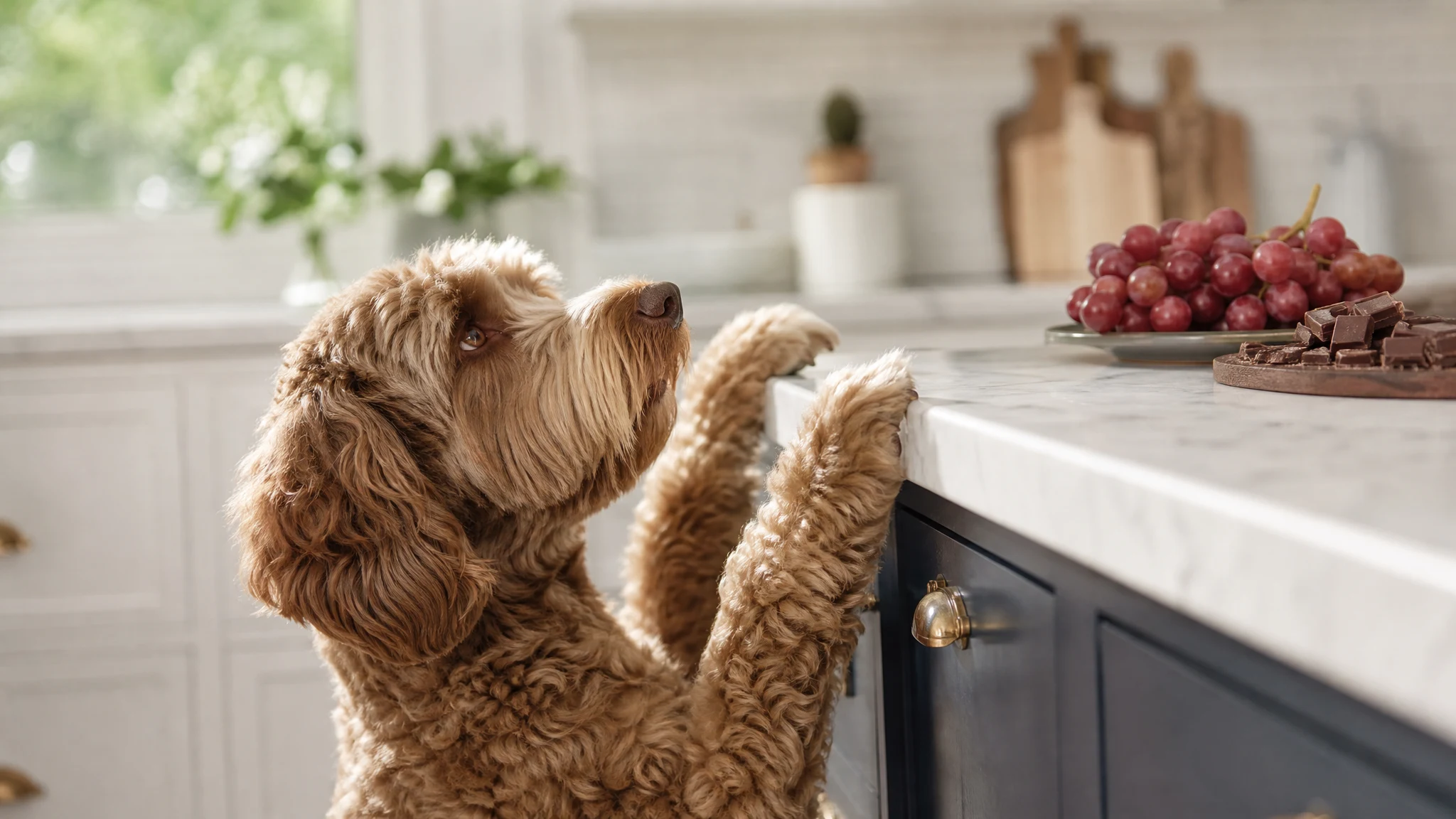
General nutrition information compiled from product labels and published sources, not veterinary advice. Your veterinarian is the right person to choose a diet for your dog, especially one with a health condition.
Labradoodles have a reputation for eating fast and eating nearly anything. A Chewy breed education page notes that the breed can gulp food and have digestion issues. That makes it worth knowing which human foods are unsafe. The answers below follow the ASPCA Animal Poison Control list of foods that are dangerous to dogs. They are general information, and your veterinarian decides what is right for your individual dog.
The Basics
What can Labradoodles not eat?
The ASPCA Animal Poison Control Center lists chocolate, grapes and raisins, xylitol, onions, garlic, macadamia nuts and alcohol among the common human foods that are unsafe for dogs. Caffeine and raw yeast dough are on that list too. The sections below cover each one.
Do these rules differ for Standard and Miniature Labradoodles?
The foods that are unsafe are the same for every size. Basepaws lists adult weights from about 15 to 45 lb for Miniatures and about 50 to 75 lb for Standards, though sources differ. Because sizes vary so much, never assume a small amount is harmless for your dog. Call for advice instead.
Why are some human foods dangerous to dogs at all?
Dogs process some substances differently than people do. Chocolate, xylitol and onions are examples. A food that is fine for a person can harm a dog's heart, liver, kidneys or blood.
Sweets and Drinks
Can Labradoodles eat chocolate?
No. The ASPCA lists chocolate as dangerous because it contains methylxanthines, which are stimulants. Baking and dark chocolate are generally considered the more concerning kinds, but any chocolate deserves a call to your veterinarian if your dog eats it.
What is xylitol, and why is it a problem?
Xylitol is a sugar substitute found in some sugar-free gum, candy, baked goods and certain peanut butters. The ASPCA warns that it can be very dangerous to dogs, affecting blood sugar and the liver. Check labels on anything you share, and treat any xylitol exposure as an emergency.
Can Labradoodles have alcohol?
No. The ASPCA lists alcohol as harmful to dogs, and that includes drinks, some desserts and unbaked dough made with alcohol. Keep cups and glasses out of reach at gatherings.
What about coffee, tea and energy drinks?
Caffeine is on the ASPCA list of foods to keep away from dogs. Coffee grounds, tea bags and some supplements and sodas all contain it. A curious Labradoodle can reach a countertop mug easily.
Fruits, Vegetables and Nuts
Can Labradoodles eat grapes or raisins?
No. The ASPCA warns that grapes and raisins can cause kidney problems in dogs, and the reason is not fully understood. That is why vets advise treating even one as worth a phone call. Raisins also hide in trail mix, bread and cookies.
Are onions and garlic really a problem?
Yes. The ASPCA lists onions, garlic, chives and leeks as foods that can damage a dog's red blood cells. Cooked, raw and powdered forms all count, so watch for them in table scraps, gravy and baby food.
Can Labradoodles eat macadamia nuts?
No. The ASPCA lists macadamia nuts as toxic to dogs, and they can cause weakness, vomiting and tremors. Cookies and other treats made with them are a common way dogs get exposed.
Is avocado safe?
The ASPCA flags avocado because of a compound called persin, and the large pit is also a choking and blockage hazard. Since a fast eater may swallow a piece whole, it is simplest to skip it. Ask your veterinarian if you are unsure.
Bones, Fat and Other Hazards
Can Labradoodles eat cooked bones?
It is best to avoid them. Cooked bones can splinter or get stuck, and a Labradoodle that eats quickly may swallow pieces without chewing. Ask your veterinarian about safer chews.
Is fatty food from the table a problem?
It can be. The ASPCA notes that fatty and rich foods can upset a dog's stomach and may lead to pancreatitis. Bacon grease, trimmings and a plate of leftovers are common culprits, especially at holidays.
What about salty snacks?
The ASPCA lists high-salt foods such as chips and pretzels as unsafe in larger amounts. Beyond that, seasoned human food often includes onion or garlic powder. Plain food is the safer choice.
Is raw bread dough dangerous?
Yes. The ASPCA warns that raw yeast dough can expand in the stomach and produce alcohol as it ferments. Rising dough on a counter is a real hazard, so keep it out of reach.
Safe Snacks
Can Labradoodles eat carrots, apples or blueberries?
These are commonly offered as dog snacks. Give them plain and in small pieces, and remove apple seeds and cores. Treats should stay a small part of the daily diet, so check with your veterinarian about what suits your dog.
Can Labradoodles eat plain cooked chicken or rice?
Plain, boneless cooked chicken and plain rice are common choices. Leave off oil, butter, onion and garlic. Because Basepaws notes skin sensitivity and allergy-related itching in the breed, introduce any new food slowly and talk to your vet about any reaction.
Do I need to change my dog's regular food to avoid these problems?
Not for this reason. Safe snacks are about what you add, not about the bowl. To see how complete foods differ on their labels, read our comparison of dog foods by label data. We compared labels only and did not run feeding trials or taste tests.
If Your Dog Eats Something Unsafe
What should I do right away?
Contact your veterinarian or an emergency clinic, or call ASPCA Animal Poison Control. Have the food, the package and your dog's approximate weight ready. Check the ASPCA website for the current phone number and for any consultation fee.
Should I make my dog vomit?
Do not try this on your own. Some substances cause more harm coming back up, and the right step depends on what was eaten. Follow the instructions from your veterinarian or poison control.
Should I wait for symptoms?
No. Signs can take hours to appear, and early advice often gives professionals more options. Call as soon as you know or suspect your Labradoodle ate something from the lists above.
Sources
- ASPCA Animal Poison Control, list of people foods to avoid feeding your pets (see the ASPCA website)
- Basepaws Labradoodle breed page